Explaining what’s behind the Muhammad Ali Boxing Revival Act
Editor’s word: This story was initially printed March 24 and up to date on July 23, the one-year anniversary of the introduction of the Muhammad Ali American Boxing Revival Act. Congress is...

Editor’s word: This story was initially printed March 24 and up to date on July 23, the one-year anniversary of the introduction of the Muhammad Ali American Boxing Revival Act.
Table Of Content
- Editor’s Picks
- Why is it not shifting forward as rapidly as anticipated?
- What modifications are seemingly?
- What are unified boxing organizations and why are they necessary?
- What are the issues about UBOs?
- How might the Revival Act favor sure promoters?
- Would the brand new invoice enhance or harm fighter pay?
- Are there well being care provisions for boxers?
- May states nonetheless impose their very own laws?
- What different main modifications would this invoice add?
Congress is weighing main federal reforms that proponents say would enhance well being protections for boxers, enhance their pay and reverse the game’s sagging recognition. Critics say the invoice would weaken key provisions of present federal laws and will wind up eradicating some boxer protections to the good thing about huge promoters such because the UFC’s Dana White and his Saudi Arabian accomplice, Turki Alalshikh.
The Muhammad Ali American Boxing Revival Act cleared main benchmarks after the Home of Representatives handed the invoice by voice vote on March 24 after a 30-4 approval vote in January by the Home Committee on Training and the Workforce. Throughout debate, just one Home member spoke out in opposition to it.
The shortage of opposition in what is often a deeply divided Congress appeared to offer weathervane of how the invoice might fare within the Senate. However Sen. Ted Cruz, R-Texas, and others say they’re having second ideas. The Senate Commerce Committee, which Cruz chairs, held hearings on April 22 to listen to from critics and proponents of the Home invoice. It now seems that some main revisions are coming.
The 2 present legal guidelines regulating boxing, the Muhammad Ali Boxing Reform Act of 2000 and the Skilled Boxing Security Act of 1996, have drawn criticism for being too imprecise and missing uniform enforcement powers. States similar to California, New York and Texas typically are left to implement their very own laws, resulting in a hodgepodge of inconsistent laws, significantly round well being and security.
Former heavyweight champ Mike Tyson, an in depth good friend of White’s, supported the brand new Revival Act revisions in December, citing its necessary medical health insurance necessities. He asserted that some promoters have used loopholes in present regulation to “regain monopolistic management over fighters’ careers.”
The influential California State Athletic Fee additionally unanimously supported the invoice regardless of opposition from fighters and different events throughout public hearings.
USA Boxing, the governing physique for beginner boxing in the USA, initially supported the invoice however withdrew its help final month in favor of a impartial place.
Many present promoters and sanctioning our bodies have expressed issues with the invoice.
The present Ali Act, in place since 2000, would not change. The Revival Act would as a substitute create the choice of a unified boxing group to complement what’s at the moment accessible for fighters.
Why is it not shifting forward as rapidly as anticipated?
The Senate Commerce Committee heard testimony on April 22 from two distinguished boxers — Oscar De La Hoya and Nico Ali Walsh, grandson of boxing legend Muhammad Ali, outlining what they regard as shortcomings within the Home invoice.
The 2 reiterated longstanding issues that the invoice would focus energy within the palms of UBOs and weaken boxers’ choices of the place and after they battle, how a lot they might be paid, and the way their well being care could be coated.
Talking in protection of the Home invoice had been Tim Shipman, president of the Affiliation of Boxing Commissions, and WWE president and TKO board member Nick Khan.
The Home model “would undermine that precept by permitting one entity to function throughout promotion, administration and matchmaking. It removes independence,” Ali Walsh informed the committee.
Cruz, chair of the Commerce Committee, stated in April he would introduce a Senate model of the Ali Revival Act that differs from the model handed by the Home. Nonetheless, as of July 23 — the one-year anniversary of the invoice’s introduction — he has but to take action. Two completely different payments imply not solely successful Senate approval but additionally both convincing a Home majority that Cruz’s model is healthier than theirs or holding a convention to compromise on a invoice that will cross each Congressional chambers. Whichever model survives, the invoice must be permitted by each homes and signed into regulation by President Donald Trump earlier than the top of the legislative session. If not, it means restarting all the course of after the brand new Congress — more likely to change after the November mid-term elections — convenes in January.
What modifications are seemingly?
A fundamental line of committee questioning throughout the April 22 listening to revolved round well being take care of fighters. Though Shipman and Khan have typically clashed over the Home invoice’s specifics with Ali Walsh and De La Hoya, the 4 agreed that fighter security must be constant amongst states and paramount in no matter invoice turns into regulation.
One concern more likely to face well being care modification issues are who pays for medical testing — the fighters or Unified Boxing Organizations. De La Hoya was adamant that UBOs ought to foot the invoice, a suggestion Cruz took underneath advisement.
Sen. Jacky Rosen, D-Nevada, requested about sponsorship for boxers and the way the system would function, signifying she would possibly need to add some monetary protections for fighters into the Senate model. Clashes might come up as members of Congress work out monetary laws. The proposed UBO system has sparked issues that promoters would wind up reaping most income on the expense of boxers.
Concentrating energy underneath UBOs would prohibit fighters’ choices and restrict alternative, Ali Walsh stated. “The coercive contracts will likely be coming again. All of the issues within the present Ali Act that protects fighters will likely be taken away and you will note it down the road.”
Ali Walsh stated if the Revival Act handed as constituted, his grandfather’s identify must be taken off the regulation as a result of “it might betray the ideas that his act was created to guard.”
What are unified boxing organizations and why are they necessary?
The laws’s most drastic change is including unified boxing organizations as an “various system for compliance.” This could permit a company to be a one-stop store for fighters from promotion to rating to sanctioning fights, much like what already exists within the UFC. The UFC has its personal rankings and belts and does all its personal matchmaking. This might reduce the facility of the present sanctioning our bodies in boxing.
Below the proposed laws, a UBO wouldn’t be reliant on any of the foremost impartial boxing sanctioning our bodies — the WBC, WBO, IBF and WBA — for belts or rankings.
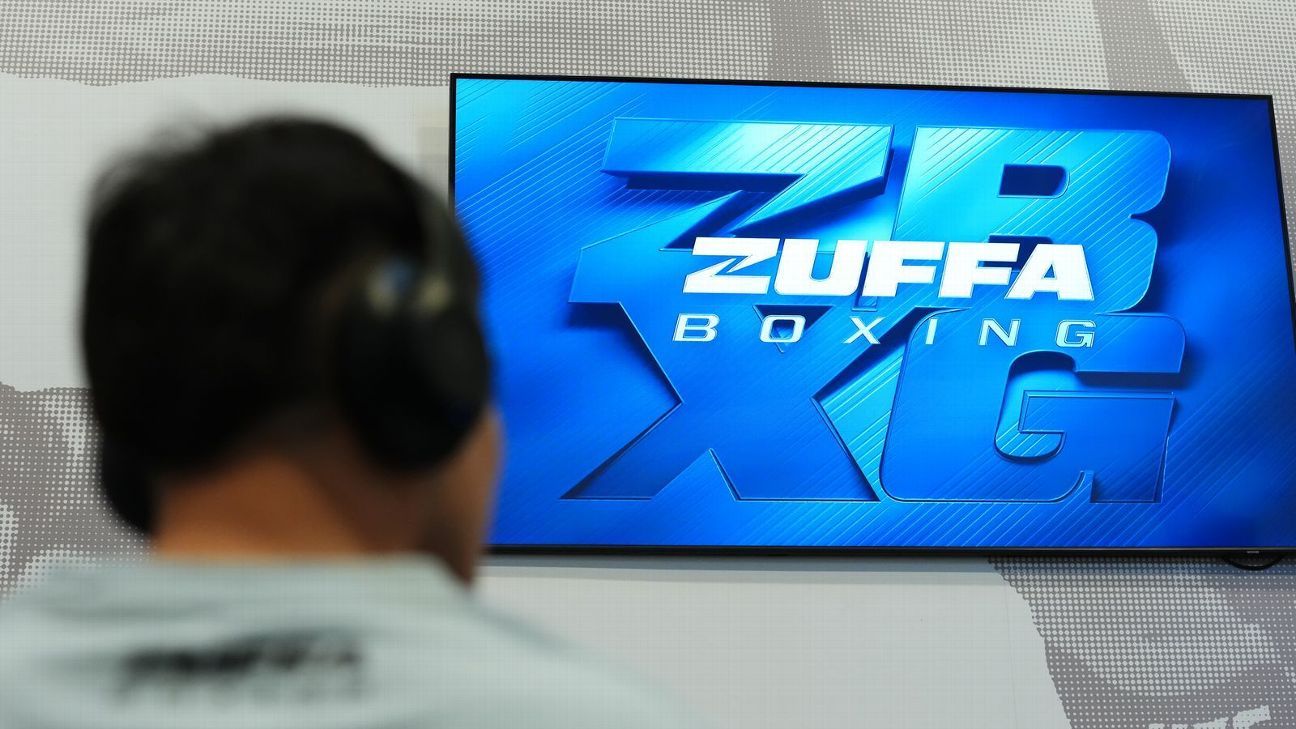
In January, White described Zuffa Boxing, the brand new boxing promotion he helped create together with Alalshikh, chairman of the Saudi Arabian Normal Leisure Authority that White runs as “a piece in progress.” It’s extensively believed if the Revival Act turns into regulation, White would create a UBO.
White beforehand stated he didn’t need to work with the sanctioning our bodies that at the moment management boxing’s rankings and belt system. The backtrack got here after Zuffa’s greatest signing, former IBF cruiserweight champion Jai Opetaia, stated he needed to grow to be undisputed champion, that means he would maintain all 4 main present belts without delay.
A UBO could be a departure from the present system, which created a separation of powers between promoters and sanctioning our bodies relating to management over rankings, matchmaking and titles. It additionally prohibited workers from boxing commissions from additionally working for promoters and sanctioning our bodies in addition to managers.
The laws does, although, prohibit a UBO from additionally being the boxer’s supervisor if the fighter chooses to rent one.
What are the issues about UBOs?
The present Ali Act prohibits “coercive contracts” and created disclosure guidelines forcing promoters to disclose how a lot cash they obtained from a battle evening to offer transparency.
It established contract necessities between fighters and promoters, separated the promotion and administration of a fighter, mandated constant rankings standards for professional fighters and required publishing modifications in a fighter’s rating.
Pat English, an legal professional who helped write the 1996 and 2000 boxing laws, informed Congress in December 2025 the Revival Act is “a betrayal of the present act” as a result of it might not present UBO fighters with related coercive-contract and promoter-disclosure protections and doesn’t require in-writing rationalization of the rankings system.
“There isn’t a justifiable cause for there to be completely different language relating to the firewall between promoters and managers established by the Muhammad Ali Act and the proposed revision,” English informed Congress in written testimony.
Prime Rank chairman Bob Arum additionally wrote a letter to Congress in December 2025 expressing concern in regards to the addition of UBOs. “The Modification strips away these and different protections for fighters set forth within the Ali Act for any fighter that indicators with a newly created Unified Boxing Group …” Arum wrote. “As presently drafted, the situations required for an entity to qualify as a UBO don’t embody the protections for fighters set forth above.”
Arum wrote “there isn’t a cause for a UBO to be exempt” from complying with the identical measures non-UBOs should adjust to.
How might the Revival Act favor sure promoters?
The larger the bankroll, the higher probability at success. If a single promoter had been in a position to signal the overwhelming majority of fighters, it might grow to be a dominant controlling physique — from rankings to title photographs to fighter pay — utilizing a UBO. It is much like how the UFC grew to become the primary MMA promotion on this planet, synonymous with the game itself.
The UFC primarily acts as the foremost leagues in MMA, much like the NFL, NBA, NHL and MLB of their respective sports activities. Boxing does not have a company like that.
MMA, the place White gained his prominence via the UFC, is just not ruled by the Ali Act. Late Sen. John McCain, a longtime supporter of the Ali Act, tried to increase the act to MMA in 2007, however the UFC opposed it and McCain’s effort failed. Then-Rep. Markwayne Mullin, a former MMA fighter who’s the newly confirmed Homeland Safety secretary, tried to do the identical in 2016, however his try additionally failed.
WBC president Mauricio Sulaiman wrote an open letter to the boxing group in January and accused “a robust entity value billions of {dollars}” of trying to enter boxing and dominate it.
“Their purpose to change the panorama of boxing within the pursuit of revenue can’t be ignored, and it must be seen for what it’s: an tried takeover of the individuals’s sport, which shouldn’t be owned or dominated by a single entity,” Sulaiman wrote, with out mentioning the UFC, Zuffa or White by identify.
White believes the provisions within the new act, which might permit a company to function extra just like the UFC does, are a distinct strategy to method how the game operates.
“They had been very involved in regards to the Muhammad Ali Act, all these different issues. None of that’s going to vary for them. Nothing goes to vary. We’re not altering one phrase of that, it may be intact,” White stated in a information convention main as much as his first Zuffa Boxing occasion. “Now fighters are going to have extra choices. Why is {that a} dangerous factor? Why are extra choices a foul factor? It is not.”
Would the brand new invoice enhance or harm fighter pay?
Supporters of the invoice level to the elevated minimums per spherical fighters will obtain and that it might stand to elevate all however the prime class of fighters. Detractors take a look at the UFC, which has been sued a number of instances for pay suppression, and specific concern over the diploma of management one group might have.
Matchroom Boxing CEO Eddie Hearn informed Boxing Scene in July 2025 that the Ali Act in its present kind is “practically at all times there to guard the fighter and ensure they aren’t taken benefit of.” Any potential alterations via this new invoice, he stated, might present extra energy to promoters over fighters.
Below the present construction, prime fighters could make tons of of hundreds of thousands of {dollars} and have alternatives to obtain massive shares of the proceeds from their fights. For instance, Sportico reported heavyweights Tyson Fury and Oleksander Usyk earned over $100 million every for his or her two fights in opposition to each other. On this system, fighters additionally pay a proportion of their purse to one of many sanctioning our bodies — a difficulty that has brought on consternation with big-name fighters like Terence Crawford in December 2025 and Shakur Stevenson in February. A UBO wouldn’t be allowed to cost sanctioning charges.
Prime ladies’s boxers previously 5 years have seen seven-figure salaries — in distinction to earlier years of receiving little cash even for title fights. Nonetheless, the overwhelming majority of fighters make far much less cash than the highest echelon, particularly after charges for managers and trainers are taken out of a payday.
The act might assist lower-end fighters with a $200-per-round minimal to offer some low-end monetary ensures for fighters.
Large-name exhibits function fighters making six-figure paychecks, in response to monetary information from the California State Athletic Fee, together with a $1 million payday for WBO junior light-weight title defender Emanuel Navarrete. Nonetheless, many smaller MMA and boxing exhibits had no fighters making over $10,000.
If a fighter does not have a battle over a six-month interval, she or he could be compensated $2,000. A fighter would not obtain this if she or he is amassing insurance coverage cash from an damage or if the fighter turns down a battle.
The invoice’s detractors, together with lots of boxing’s present big-name promoters, see the invoice as a means for promotional large TKO Group Holdings, which encompasses the UFC and the WWE, to bypass the present system that protects fighters. Some argue that the invoice will wind up limiting somewhat than enhancing fighter pay.
The UFC has confronted accusations previously of underpaying fighters. It settled one landmark antitrust lawsuit in 2024 for $375 million.
The Guardian’s Thomas Hauser obtained a contract for a Zuffa fighter and reported the contract gave the group the power to make use of a fighter’s “id” to advertise Zuffa and merchandise of Zuffa’s sponsors. Fighters would obtain an unclear proportion.
At current, fighters typically promote sponsor area on their battle trunks, T-shirts and hats. Based on The Guardian, Zuffa fighters can put on solely Zuffa-approved gear and equipment, which might price fighters cash in misplaced sponsorship alternatives. That is much like the UFC’s mannequin.
Are there well being care provisions for boxers?
Fighters are sometimes on their very own for well being care as of now, except it’s written into contracts with promoters for his or her fights. Within the new invoice, promoters should have a minimal of $50,000 in medical health insurance and $15,000 in unintended loss of life advantages for accidents suffered throughout fights — the Affiliation for Boxing Commissions recommends $100,000 in well being and unintended loss of life advantages per fighter.
Fighters should cross a prefight bodily examination licensed in writing to the state fee saying the fighter can compete safely. Ladies should additionally present documentation of a unfavourable being pregnant check lower than two weeks earlier than a battle. A doctor have to be current ringside and an ambulance and emergency personnel current on web site.
In any other case, prefight and postfight medical testing varies based mostly on state commissions, which might require extra stringent procedures.
Below the Revival Act, all fighters could be required to have annual medical examinations, together with a yearly bodily together with mind, eye and coronary heart exams and blood work each six months together with the already-required being pregnant check for ladies fighters. Moreover, it requires mind MRIs “not less than each three years” and extra frequent exams if a fighter is knocked out. UBOs must cowl prices. It is unclear who’s liable for non-UBO fighters.
If a fighter is over 40 and preventing in a UBO, she or he should have bloodwork and urine exams yearly and a chest X-ray not less than as soon as each six years. State boxing commissions have their very own over-40 guidelines, together with neurological exams.
The UBO should cowl prices and supply coaching and rehab amenities for fighters, medical health insurance throughout coaching intervals and medical coordinators to assist with necessities. It should additionally cowl prices for any anti-doping program testing incurred throughout coaching for a battle.
The fighter nonetheless holds duties for medical health insurance deductibles from the UBO-provided insurance coverage.
Drug testing may also be required for any title bout and “at random for all different matches.”
May states nonetheless impose their very own laws?
The invoice incorporates no prohibitions on state laws offered they meet the Ali Act baselines. States might additionally nonetheless decide whether or not to permit a battle based mostly on the state’s personal requirements.
What different main modifications would this invoice add?
The invoice would permit the Affiliation of Boxing Commissions and Combative Sports activities and the Affiliation of Ringside Physicians to create constant requirements all through the game, together with a mannequin of laws and regulation defending the “security, well being, wellbeing and financial alternative” of boxers, strict authority tips for medical suspension and consensus statements from specialists in sports activities medication. The ABC has minimal powers and is charged primarily with making suggestions to state commissions. The ABC has no enforcement powers over states.
It will additionally create suggestions of greatest practices together with annual compliance experiences of boxing commissions adhering to these greatest practices.
The ABC additionally could be allowed to certify judges or officers for fights together with state commissions. Within the present regulation, solely state commissions have that energy.
“I needed to ensure the ABC was listed within the federal regulation,” Mike Mazzulli, the ABC’s previous president, informed ESPN. “I needed to ensure the fighter security was paramount and I needed to guarantee that judges and referees had been going to be educated. I needed to ensure there was going to be minimal funds to the fighters.”
The Revival Act might additionally streamline titles. Below the present system, a few of the sanctioning our bodies hand out belts like sweet as a substitute of 1 champion per weight class. The Revival Act says “a sanctioning group or unified boxing group shall award just one championship title for every weight class.”
There’s a carve-out for interim titles in instances of damage, sickness, the refusal to defend a belt or the shortcoming to journey. This might cease hold-ups in some weight lessons the place fighters do not defend belts for months or, in some instances, over a yr.